Saturday, January 26, 2013

Great Tournament, Great People - Better Cause!

Brian Crawford Memorial Benefit
PRESENTED BY TRAVEL SPORTS CHAMPIONSHIPS

Oak Grove Park Grapevine, Texas

Register Online For This Event - http://www.travelsportsbaseball.com/

February 22-24, 2013

100% OF THE PROFITS FROM THIS EVENT WILL GO TO SUPPORT

THE CONSTRUCTION OF THE BRIAN CRAWFORD MEMORIAL COMPLEX.

Brian TBall.jpg


At the tournament. See tournament information & registration information below.

Kenneth Crawford

Brian Crawford Memorial Benefit
PRESENTED BY TRAVEL SPORTS CHAMPIONSHIPS

Oak Grove Park Grapevine, Texas


February 22-24, 2013

100% OF THE PROFITS FROM THIS EVENT WILL GO TO SUPPORT
THE CONSTRUCTION OF THE BRIAN CRAWFORD MEMORIAL COMPLEX.
Please help support the construction of this great Memorial Complex being built in Brian's name. Brian lived his life for family and Christ and continues to inspire people touched by his story years after his passing. All games played at Grapevine Oak Grove Park (main baseball complex only) or Southlake Bicentennial Park. These are all beautiful well-kept ball fields that we are proud to utilize to host our events. Oak Grove Park offers 9 fields, 11 full batting cages, 18 soft toss stations, 10 bull pens and an onsite first aid station staffed by Baylor Sports Medicine. Oak Grove Park is one of the top baseball facilities in the nation. Southlake's Bicentennial Park has recently added four top rated 40/60 and 46/65 fields bringing the parks total to 9 fields. The 2 parks combined construction cost is well over $30M and provides the best tournament experience possible.

Awards for 1st and 2nd place teams.

Minors division is for AA for Minor teams only!

3 GG tournament with 2 pool play games into a single elimination bracket.

Teams needing schedule request, please use the app located on the main menu.

Teams supply 3 regulation balls per game, balls will be returned at the end of the game.

Bracket schedules will be available Tuesday at 12pm prior to the tournament.

TEAMS MUST PAY ENTRY OR GATE FEE BY MONDAY AT 8AM TO BE PLACED IN THE BRACKET.

BASEBALL 7U
$195.00
10
max teams
BASEBALL 8U
$195.00
10
max teams
BASEBALL 9U
$295.00
8
max teams
BASEBALL 10U
$295.00
8
max teams
BASEBALL 11U
$295.00
8
max teams
BASEBALL 12U
$295.00
8
max teams
BASEBALL 13U
$295.00
8
max teams
BASEBALL 14U
$295.00
8
max teams
GATE FEE $125.00


BRIAN CRAWFORD MEMORIAL
Build_It_They_Will_Come.jpg


It's FREE!
baseballtrainingmagazine.blogspot.com
Baseball Training Magazine on Facebook

Thursday, January 24, 2013

Backhands Made Easy

Baseball Backhand Catch

How to properly execute the backhand catch when fielding ground balls and line drives.  
The baseball backhand is a critical defensive skill that all infielders should master.
How to field a ground ball by making a backhanded play
Author and NY Yankee Doug Bernier backhands an infield ground ball
1. First step quickness
First step quickness is important. Try to beat the ball to a spot. Do not lazily meet the ball at a spot because you were timing the baseball. The quicker you move the better angle you can create to help field the ball a step or two closer to home plate. This will give you more time and a shorter throw.

2. Foot Position.

When fielding a backhand catch, have your right foot in front of your left foot. Use this unless you have no other choice.
3. Take your glove through the baseball.
Once your feet are in a good position, it is now time to use your glove to work through the baseball.  You want to try to field the baseball in between your thumb and pointer finger.  Take your glove and move it through the baseball.  This aggressive move gets your momentum going in the right direction.
4. Starting Your Momentum.
Once fielding with this backhand catch, your feet are already in the correct position.  Push off the back (right) foot and get some momentum toward first base to make a throw.
When there is not enough to time.
The opposite foot position is used (left foot in front) only on balls where we can’t set our feet in time. After we field this ball (this is a long throw) we need to get some type of momentum and square our feet up to first base before we throw.
Pro Fielding Tip:
Work on both types of baseball backhands during practice, because you will need both of them in the games.

About the Author: Doug Bernier

Doug Bernier, founder of Pro Baseball Insider.com, debuted in the Major Leagues in 2008 with the Colorado Rockies, and has played professional baseball for 11 years. After hitting .361 with the New York Yankees this 2012 spring training where he relieved Derek Jeter at shortstop, Doug spent the 2012 season with the Yankees’ triple A team.

It's FREE!
baseballtrainingmagazine.blogspot.com
Baseball Training Magazine on Facebook

Monday, January 21, 2013

Ron Fraser, University of Miami HOF Baseball Coach


Ron Fraser, 'the wizard of college baseball', dies at 79


Ron Fraser
Longtime University of Miami coach died on Sunday morning, after a prolonged battled with Alzheimer's disease

Ron Fraser coached the national teams from two different countries, is a member of 10 different Halls of Fame, won two NCAA baseball championships and never had a losing record in a 30-year career with the Miami Hurricanes.

He'll be remembered for so many other reasons.

The longtime Miami coach – dubbed "the wizard of college baseball" – died Sunday morning after fighting Alzheimer's disease for many years, family spokesman Tony Segreto said. University officials said Fraser was 79, though a statement issued by his family did not divulge his age or other private matters, including a cause of death.

"The impact he had on our university, on college baseball and on the game itself worldwide is immeasurable," acting Miami athletic director Blake James said.

Fraser's legacy will be, as he once said, his penchant for "doing crazy things out there". He raffled car batteries, hosted bikini nights, threw nine-course gourmet dinners on the Hurricanes' infield, even is credited for helping bring batgirls into the college game. If any idea to drum up interest or money for his program came his way, Fraser wanted to make it happen.

"No one did it better," said Texas' Augie Garrido, the NCAA Division I coaching-wins leader.

But Fraser's finest moment may have come at the College World Series in 1982.

A few Hurricanes stuck fingers in their ears, the signal for the hidden-ball trick, known to this day as

"The Grand Illusion." Miami was leading 4-3 in the sixth inning of a winner's bracket game in Omaha, Neb., and Wichita State's Phil Stephenson was on first base.

With his team down by a run, Stephenson was going to try to steal; everyone in the stadium knew this, especially since he already had swiped 86 bases that season.

So the play, which was installed in 15 minutes the day before, was called. Skip Bertman, Fraser's associate coach at the time who went on to become a great at LSU, gave the signal.

Mike Kasprzak was the Miami pitcher, and made a few throws over to first to get Stephenson's attention.

Then came the moment. Kasprzak made another "throw" to first, one where Hurricanes' first baseman

Steve Lusby dove for the supposedly errant ball and, as the story goes, swore to further sell his displeasure. Several Hurricanes started chasing the "ball" along the right-field line, and others in the dugout pointed up the line excitedly, getting in on the act.

And what an act it was.

"He would teach the bat girls to scramble as if they were getting out of the way of it," Florida State coach Mike Martin said Sunday.

"They were sitting on a chair. He also had the bullpen and had a guy call it, 'There's the ball! Get out of the way!' It was theatrics at its best."

Sure was. Kasprzak tossed the ball — he had it the whole time — to second base, a stunned Stephenson was tagged out trying to advance, Miami won the game and went on to capture the national championship.

When the play was called, Kasprzak remembers exactly what was going through his head: "What if this doesn't work?"

"I'm not sure if every coach would have allowed their teams to attempt something like that," Kasprzak said Sunday in a telephone interview.

"He was always the showman type. Doing something like that on a stage as big as the College World Series was something that maybe only he would have attempted. That worked right into his personality and his approach to the game and putting on a good show."

Fraser took Miami to another national title in 1985, and wound up leading the Hurricanes to the College World Series 12 times over his 30 years at the school. He retired in 1992 with 1,271 wins.

But his biggest victories came through his promotion of the college game.

"I was more interested in getting the people in the stands," Fraser once said, "because I knew we'd never be really successful unless we made money."

Fraser also played a key role in getting baseball on national television. And now, the College World Series – the entire NCAA tournament, really – is a mainstay on TV, as are hundreds of regular-season games annually.

"Coach Fraser is the most influential person in my career and the man who put college baseball on the map," current Miami coach Jim Morris said last year. "He is like a father to me."

Ronald George Fraser was born and raised in New Jersey, then attended Florida State, where he's a member of the Seminoles' Hall of Fame.

His induction there really had very little to do with his athletic achievements in Tallahassee.

"Florida State University is proud to honor a former athlete who more recently has become a distinguished opponent," read the text of his induction into that Hall of Fame in 1981. "A brilliant promoter and coach, he has advanced collegiate baseball at the University of Miami, across Florida and across the nation."

That's how well thought of Fraser was: The Seminoles put an arch rival in their Hall of Fame.

"Heck, he used to wash the baseballs in milk because he didn't have enough money to buy the dozen or so baseballs he needed," Martin said. "So, he'd wash them in milk and use it as a cleaner. ... He was a character. And, he really was a guy who shared his knowledge with younger coaches."

"I'm going to miss him. He was a good man."

After a stint leading the Dutch national team, Fraser took over at Miami in 1963 with a $2,200 salary, a converted shower for an office and a cow pasture for a field.

He got the school's attention in most unconventional way – which seemed fitting for him. University officials said Sunday that Miami first noticed Fraser by his appearances on the television game show, "What's My Line?"

"He was the person who put college baseball on the map – not only in the crowds and the entertainment we see today, but in the competitiveness of the game itself," Miami trustee Paul DiMare said. "It was all him."

College baseball was not a revenue-generating sport, even for successful programs, so Fraser got creative.

Giveaways, parachutists, whatever he could think of, it all was part of Fraser's plan to entice more people to come see his team.

"My whole thing was to entertain the people. People said it was the winning, but I was trying to entertain the people so they would come back," Fraser said around the time his coaching career ended. "I did a lot of crazy things and it worked."

Attendance at Miami grew over a seven-year span from 33,000 a season to 90,000. And in 1981, the

Hurricanes set a record with 163,261 fans – over 3,200 per game. Attendance dipped below 100,000 only once for the remainder of Fraser's tenure.

After eight straight winning seasons to start off his tenure at Miami, the Hurricanes finally broke through with the school's first NCAA Tournament appearance in 1971. In 1982, the Hurricanes swept through five games in Omaha, clinching the school's first national title with a 9-3 win over Wichita State.

Three seasons later, the Hurricanes won their second championship, beating Texas twice in three days for the 1985 crown. That team finished with a school record 64 wins.

And to think – Fraser's run at Miami almost didn't get started.

With the athletic department in dire straits in the early 1970s, the school elected to cut one program.

Football was lousy, basketball was worse and baseball – though far more successful than the others – didn't make money.

"We were going to have to let one of them go," Fraser said.

He fully expected baseball to be the program that got cut. So in a last-ditch effort, Fraser called in some favors.

Baseball Hall of Famer Stan Musial (who died at 92 on Saturday, one day before Fraser), major league broadcaster Joe Garagiola and other notables showed up at a beach benefit banquet that impressed the school.

In 1972, the university dropped basketball instead of baseball.

Fraser made the move pay off, finally leading Miami to its first College World Series appearance in 1974.

"Coach Fraser had a tremendous impact on the baseball program at the University of Miami at a pivotal time in our history," Miami President Donna Shalala said.

"His love of the sport and the program can still be felt, years after this legendary tenure at 'The U.'"

Fraser is a former NCAA coach of the year and coached numerous U.S. national teams – including the 1992 Olympic team, and went on to work with many community and charity organizations in his retirement.

Miami officials said he had three children and five grandchildren.

Funeral arrangements have not been announced.

"On the field and off, Ron Fraser showed how one man can make a difference," James said.

"The University of Miami, South Florida and college baseball are all better because of him."

It's FREE!
baseballtrainingmagazine.blogspot.com
Baseball Training Magazine on Facebook

Saturday, January 19, 2013

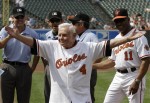
Remembering Hall of Fame Manager Earl Weaver


In the 1970s, when female reporters were first allowed in baseball locker rooms, I was leaving Earl Weaver’s office one night after his smart, sarcastic postmortem of a tough Orioles defeat.

I realized that the only woman on the beat, a relative newcomer, had missed Weaver’s performance.

Entering his office as we all left, she looked worried.

Weaver dressed down reporters for dumb questions and at times demanded what you would have done — and why — before he would give his own answer.

His office was sometimes a funny place, but also electric with tension: Baseball spoken here.

Eavesdropping is a clubhouse sin. But I wanted to see how cruel Weaver might be. 
To that point, I’d never met anyone in baseball with much grasp that a female journalist had every right to be there.


“So,” said Weaver, businesslike, “do you want it all or just the highlights?” And he started repeating his best answers as she wrote.

Earl Weaver died Saturday at 82.

Whatever you think he was, you’re right.

But he was probably also, to some degree, the opposite as well.

Whenever you assumed he was a man of his time, defined and limited by immersion in his sport, he often showed he was ahead of the times and also, frequently, ahead of his sport.

In death, we will see images of his tirades at umpires, be reminded of his funny wisecracks and of his sense of strategy that predated several “Moneyball” theories by a generation.

We’ll see a hard, smart man with a Chesapeake crab’s shell, little social polish and a need to overcompensate for his lack of size and ability as a minor league ballplayer.

We all saw that.

But in nine years of covering the Orioles beat, I saw another Weaver, one that doesn’t contradict the first, but rather broadens him.

He didn’t open up often, but when he did, you were floored.

He knew himself — why he was who he was and why he managed the way he did — as well as anyone I ever covered.

We knew he had examined baseball and hadn’t missed much. But he’d also examined himself and analyzed in detail everyone around him, too.

The distance Weaver kept from his players, with no desire whatsoever to be their friend, but rather to be their leader, was his defining trait to me.

That distance gave him authority and made every day at the park feel just a little bit dangerous.

What would Earl do? What might he not do, if he felt like it?

No contemporary team, in my experience, was on its toes in the sense that Weaver’s Orioles always were.

Reggie Jackson only played one season for Weaver but said: “I loved the little Weave. If you made a mental mistake, you saw him waiting for you on the top step of the dugout when you came back in. He’d just say one word, ‘Why?’ And you better have an answer. On his team, if you didn’t ‘think the game,’ you had a problem. He was right in your face.”

“We are all on speaking terms. We have a little rapport. Not too much,” Weaver told me, regarding his relationships with his players.

“You learn the lesson the first day in Class D [what the lowest rung of the minor leagues was once called]. You’re always going to be a rotten bastard, or in my case, a little bastard, as long as you manage. That’s the rule. To keep your job, you fire others or bench them or trade them. You have to do the thinking for 25 guys and you can’t be too close to any of them.”

It's FREE!
baseballtrainingmagazine.blogspot.com
Baseball Training Magazine on Facebook

Thursday, January 10, 2013

Mariano Rivera: A Profile in Strength Training and Pitching Success

It's FREE!
baseballtrainingmagazine.blogspot.com
Baseball Training Magazine on Facebook

Monday, December 31, 2012

REMEMBERING ROBERTO CLEMENTE


40 years ago today... 

Major League Baseball tragically lost one of its best.

On New Years Eve, (December 31, 1972)   while on a mercy mission to deliver supplies to earthquake victims in Nicaragua, Roberto Clemente died in an airplane accident.

He died the way he lived... Doing anything and everything he could to help make things better for others.

Ironically... On the last day of the 1972 MLB season... Roberto got his 3,000th hit.

Appropriately, he was elected to the Baseball Hall of Fame the following year.

40 years later... his spirit is as strong as ever.

It's FREE!
baseballtrainingmagazine.blogspot.com
Baseball Training Magazine on Facebook


Friday, December 28, 2012

Abolish Burnout; Fun is the Rule!

 For Coaches and Parents...

Burnout In Youth Sports
By Marty Schupak

Reprinted from Youth Sports Tips By Marty Schupak

Burnout in youth sports is a threat to the physical and mental stamina of young athletes. As competitive youth athletics engages younger participants each year, the threat of, both, physical and mental burnout in young players grows more imminent.

Over involvement in competitive leagues has long-term consequences for kids, if after the first 12 years of their lives they abandon organized sports or, perhaps, physical activity completely.

This alarming situation is compounded by the growing competition between youth sports and modern technology, which is driving youngsters to become sedentary, often in the form of sitting in front of a computer for hours at a time.

Unfortunately, once young victims of burnout quit sports, they rarely return. This startling predicament of modern youth sports can be attributed to the actions of parents and coaches.

Parents who enroll their children in too many sports or multiple leagues for one sport end up constructing a trap that will inevitably catch up with their kid. These children are often bound by impractical time constraints, almost literally living out of their family vehicles in order to accommodate their hectic schedules.

Parents must find a reasonable balance for their children and help budget their time.

Youth coaches can also share the blame for the dilemma. Coaches who allow their practices to become drudgery can get feelings of resentment from their players.

Conducting short, stimulating, fun practices that convey skills in the form of spirited activity can turn practices into a positive experience for young players. If players leave practice, unmotivated to show up at the next one, something is amiss.

While burnouts result from participation in too many sports, as well as enrollment in too many leagues for a single sport, the latter scenario may pose greater danger for the player.

Having a child play in numerous leagues in order to specialize their talents often leads to physical harm.

Using the same muscles over and over again without varied activity can introduce problems with the child's growth platelets. This kind of damage can persist into long term health issues.

Consider a twelve year old youth baseball player who is involved in two leagues and is a pitcher.

Suppose the pitch count slips away from an attentive coach or parent, or the coach sneaks in a few extra innings for a game that "the team needs."

If this realistic scenario repeats itself enough, the perfect formula is created for serious arm injury. It is not difficult for parents to overlook this outcome when they are blinded by their personal motivations.

Perhaps the parent is looking to vicariously relive their childhood.

Hopes of a college scholarship seven years down the road could also drive a parent down this dangerous path.

So what is the correct formula? Unfortunately, there is no single answer to this question.

All kids are different and some are more physically resilient than others.

Parents need to prioritize their children's physical and mental well-being over their own emotional and monetary incentives.

A lifestyle that emphasizes a balance between school, extracurriculars, and free time, is probably the best thing for all kids in the long run.

And if you, as Parents, or your kids, who participate in youth sports leagues always seem tired, maybe this is an indicator to slow down.

Remember, kids also need some free time away from organized sports to be creative in their backyards or the schoolyard. The burnout factor is something parents and communities need to pay attention to.

Competition is great, but the overindulgence might be doing more harm than good.

It's FREE!
baseballtainingmagazine.blogspot.com
facebook.com/baseballtrainingmagazine